
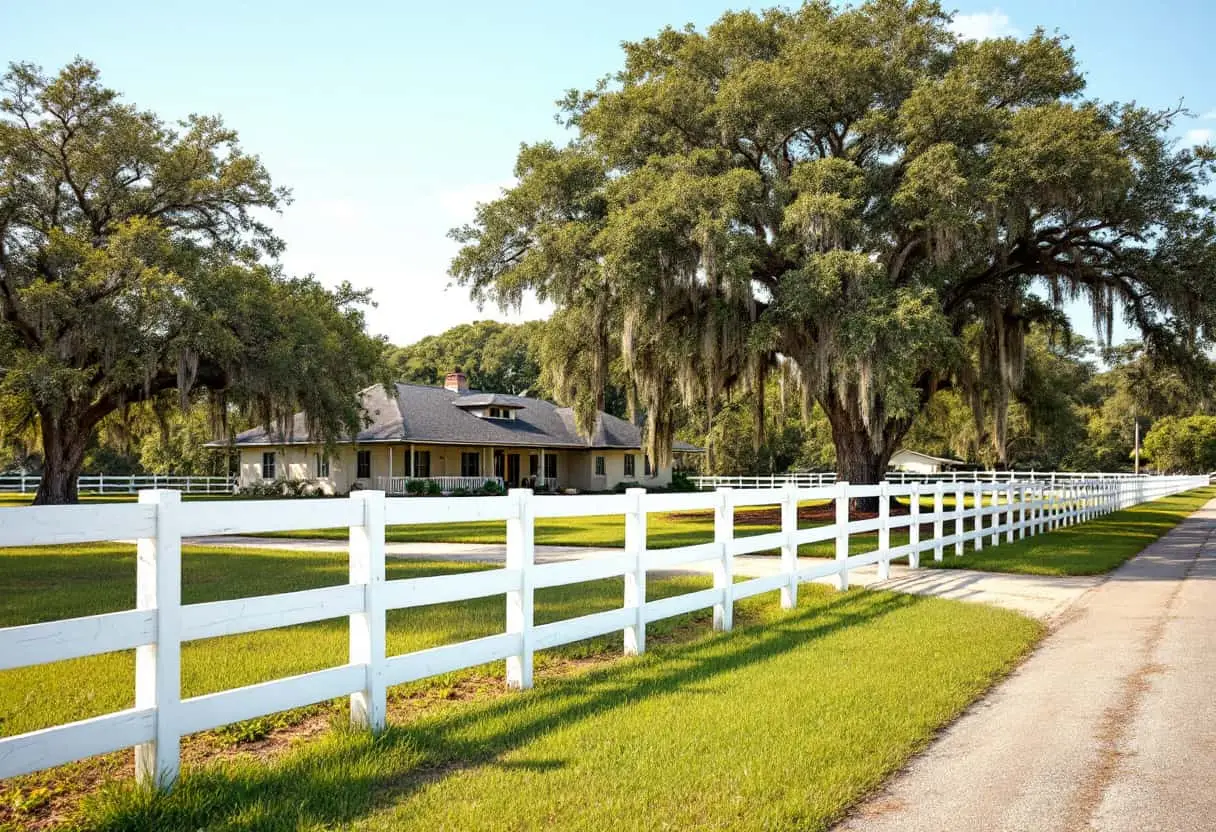
A village barely three decades old
Wellington did not begin operating as its own municipality until March 1996, so most of its housing stock is newer construction under modern code, not the older materials common in a longer-settled city.
Equestrian country, still fully on our board
Wellington only began operating as a village in 1996, and its water utility splits at State Road 7 rather than covering the whole map: two details that shape how we plan a visit before the truck ever leaves Davie.
Do you actually cover Wellington, given how far it is from Davie?
We do cover it, and we say so plainly rather than let the distance surprise anyone. Wellington sits close to 66 kilometers from our Davie base, which is a real drive, and the village itself is young as municipalities go: it began operating on March 28, 1996, decades after most of Broward’s tract housing went up. A lot of what reads as old plumbing in Wellington is really just standard for a build from the late 1990s through the 2000s.
The water utility is the one thing that genuinely splits by address here: Wellington’s own utility serves the area west of State Road 7, while Palm Beach County Water Utilities handles the rest, so we confirm which system a property sits on before quoting anything involving the main line. Add in the horse-country lots and the canals cut through former Everglades marsh, and irrigation and drainage questions come up more than they would on a typical suburban block.
WELLINGTON, SPECIFICALLY
Three things about Wellington we account for before quoting anything.
Wellington did not begin operating as its own municipality until March 1996, so most of its housing stock is newer construction under modern code, not the older materials common in a longer-settled city.
West of State Road 7, the village’s own Utility Department handles water and wastewater; east of it, Palm Beach County Water Utilities takes over, and the two systems are worth telling apart before any main-line work.
Much of Wellington was reclaimed Everglades marsh before it was a village, and the drainage canals cut through it still shape how irrigation, backflow, and outdoor plumbing get planned on a horse property.
Named communities we already know
A few of the named communities that come up most in Wellington.
A gated equestrian club community from the 1970s and 80s, where irrigation and outdoor plumbing usually run through an HOA-managed system.
A fly-in community of roughly 240 homes on one-acre lots, each with its own hangar, which means larger outbuildings often need their own plumbing runs.
A golf-course residential community built mostly in the 1990s, where irrigation lines and pool equipment tend to be original to that construction wave.
Getting the paperwork right
Wellington’s own systems only cover part of the map, so we confirm which applies before any main-line work.
RELATED
Questions Wellington callers ask first
We schedule Wellington with the real drive time built in from the start, rather than promise a number we can’t consistently hit from Davie.
Not typically. Most of the village runs on a piped utility, split between Wellington’s own system west of State Road 7 and the county’s east of it.
Often yes. Larger irrigation runs, canal-fed water, and outbuildings like barns or hangars can mean extra plumbing that a standard single-family estimate doesn’t cover.
Generally newer. The village didn’t start operating until 1996, so most construction here falls under more recent code than an older Broward or Miami-Dade suburb.
Yes, on the same schedule as the rest of our board, including the Winter Equestrian Festival season when the village gets especially busy.
Ready when Wellington is
Whether it’s a barn’s supply line or a house off State Road 7, someone answers the Wellington line whenever we’re on call.
Wellington gets the same 24-hour crew as the rest of our board.