
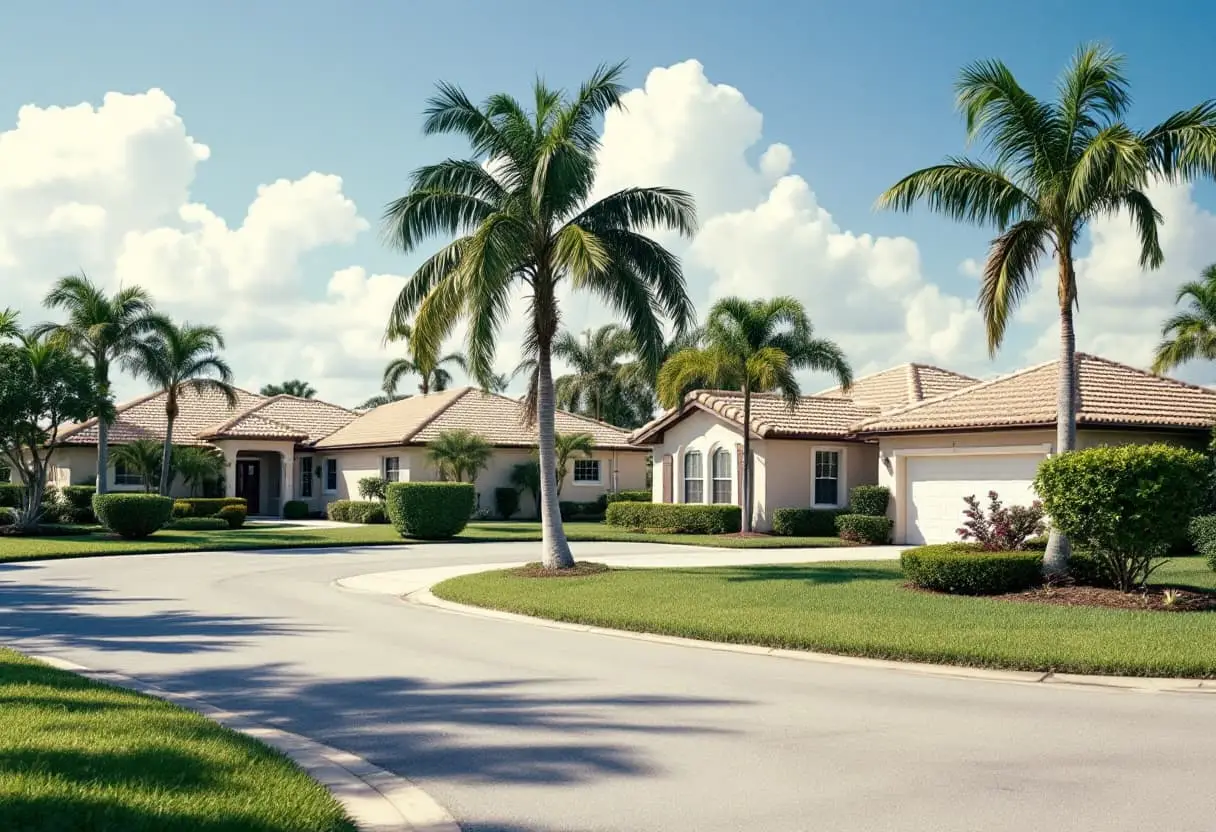
A single fast-growth window, not a gradual one
Chartered in 1957 on former farmland, the village had roughly 800 homes within two years: a compressed building boom means whole streets share the same age and often the same original materials.
A village built from farmland after 1957
Most of Palm Springs draws from its own groundwater wells rather than a shared county main, and a meaningful share of the village lives in manufactured or multi-family housing from the 1980s. Both facts change what we bring on the truck.
Is Palm Springs really on our route, or just close enough to list?
It’s on our route. Palm Springs sits about 65 kilometers from our Davie base, just south of West Palm Beach, and the village itself did not exist as a place until the Florida Legislature chartered it in 1957 out of open farmland; within two years roughly 800 homes had already gone up. That compressed early growth means a lot of the original housing dates to a narrow window, which is useful to know before a job even starts.
Water is the part that actually varies here: most of the village draws from its own groundwater wells rather than a county main, though a handful of streets are served by Palm Beach County Water Utilities instead, so we confirm the source at the meter rather than guess by zip code. Groundwater from the surficial aquifer tends to carry more hardness and iron than treated surface supply, which shows up over time as scale inside a water heater.
PALM SPRINGS, SPECIFICALLY
Three things about Palm Springs we account for before quoting a job.
Chartered in 1957 on former farmland, the village had roughly 800 homes within two years: a compressed building boom means whole streets share the same age and often the same original materials.
Most addresses draw from the village’s own groundwater wells; a smaller number are served by Palm Beach County Water Utilities instead, and we check which applies before recommending anything for hardness or a water heater.
A real share of Palm Springs lives in manufactured-home communities and condo buildings built mostly in the 1980s, which run different supply and drain configurations than a typical slab-on-grade single-family house.
Named communities we already know
A few of the named communities that come up most in Palm Springs.
A mix of manufactured, multi-family and single-family housing from the 1980s, mostly private and HOA-governed, which shapes who signs off on a job.
Condo buildings that went up between the 1970s and early 1980s, where a leak or a stack issue is usually a shared-building matter, not a single unit’s.
Its own separate community until the village annexed it in 2011, so its infrastructure history is worth checking independently rather than assumed.
Getting the paperwork right
Palm Springs runs its own building office and, for most addresses, its own water utility too.
RELATED
Questions Palm Springs callers ask first
It’s inside it. The distance from Davie is real and we don’t hide it, but the village gets the same crew and the same standard as anywhere closer.
Depends on the street. Most of the village runs its own groundwater wells; a smaller share connects through Palm Beach County Water Utilities, and we confirm which one applies to your address.
It can. Manufactured and multi-family housing here often runs different supply and drain layouts than a typical single-family slab, so we check the configuration before quoting.
Often close to the village’s own age. A compressed building boom followed the 1957 charter, so entire streets frequently share the same original construction era.
Yes, on the same schedule as the rest of our board: dispatch does not stop at a county line or a normal business hour.
Ready when Palm Springs is
An aging original line rarely fails at a convenient hour, so the Palm Springs line stays staffed around the clock, holidays included.
Palm Springs calls get the same crew, day or night, every time.