
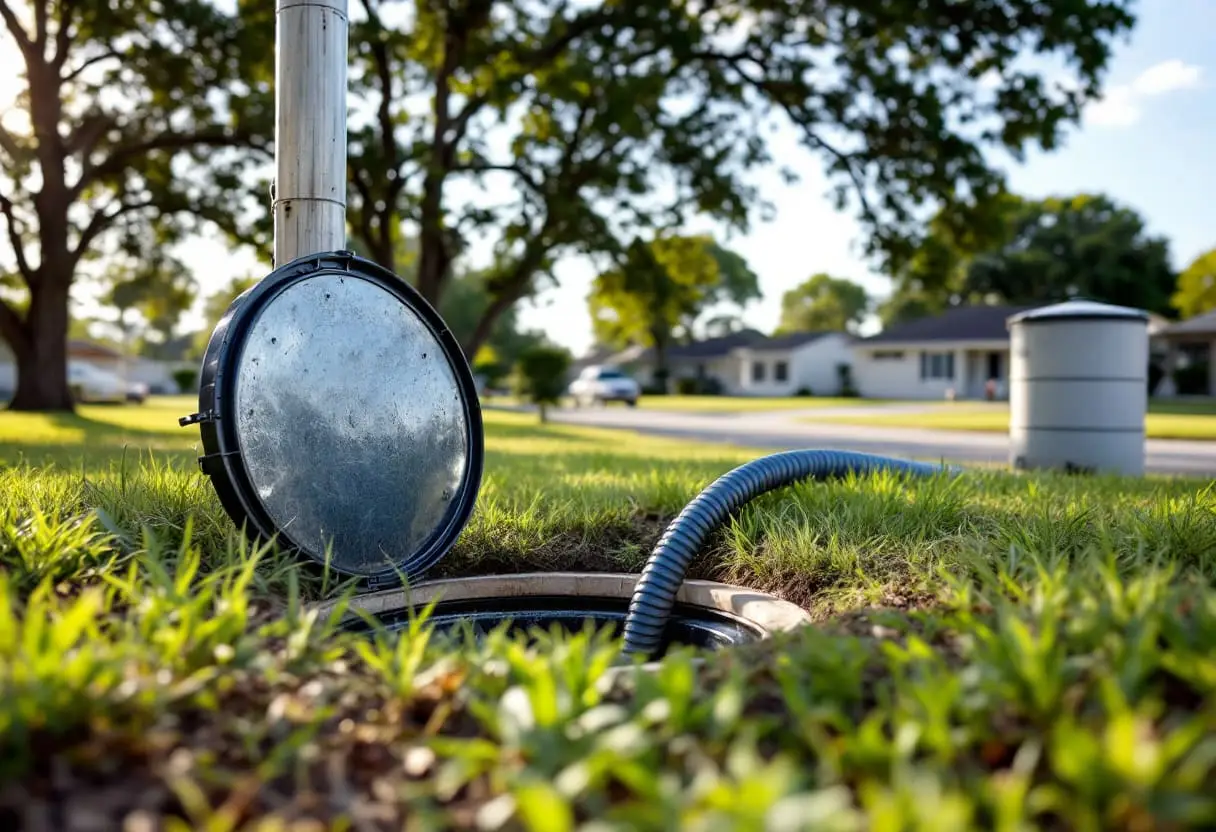
Household wells on larger, western parcels
A meaningful share of the large-lot and equestrian-zoned properties west of University Drive draw their entire household supply from a private well, paired with a septic system for wastewater.
Diagnosed as its own separate system
Weak pressure, a pump that short-cycles, or one that has stopped altogether: a private well pump runs your household or your irrigation independently of the county main, and gets worked on as its own system.
Why does a well pump keep turning on and off rapidly?
That rapid on-off cycle is a pressure-tank symptom more often than a pump symptom: once the tank’s internal air cushion is gone, it can no longer smooth out ordinary pressure swings, so the pump kicks on for a few seconds at a time instead of running a normal cycle. A failing pressure switch can produce an identical pattern, and a check valve that lets the column of water slide back down the casing between uses will too, since the pump then has to refill the entire line on every single start. Confirming the tank’s air charge first is what actually separates the three.
On a property drawing from a private well rather than the county main, whether that well feeds the whole household or only the irrigation zones, the pump is a genuinely separate system from anything municipal, and it gets diagnosed on its own terms rather than assumed to share a cause with an ordinary plumbing complaint.
What we diagnose
Four patterns cover most of the calls a private well generates.
Most often traced to a tank that has lost its air cushion or a pressure switch on the way out, neither of which requires swapping the pump itself.
The pump may simply be aging out, the intake screen may be fouled, or the water level in the well itself may have fallen.
Points at a check valve or foot valve letting the system lose its prime between cycles.
Electrical, a tripped breaker or a failed capacitor, or a pump that has genuinely reached the end of its service life.
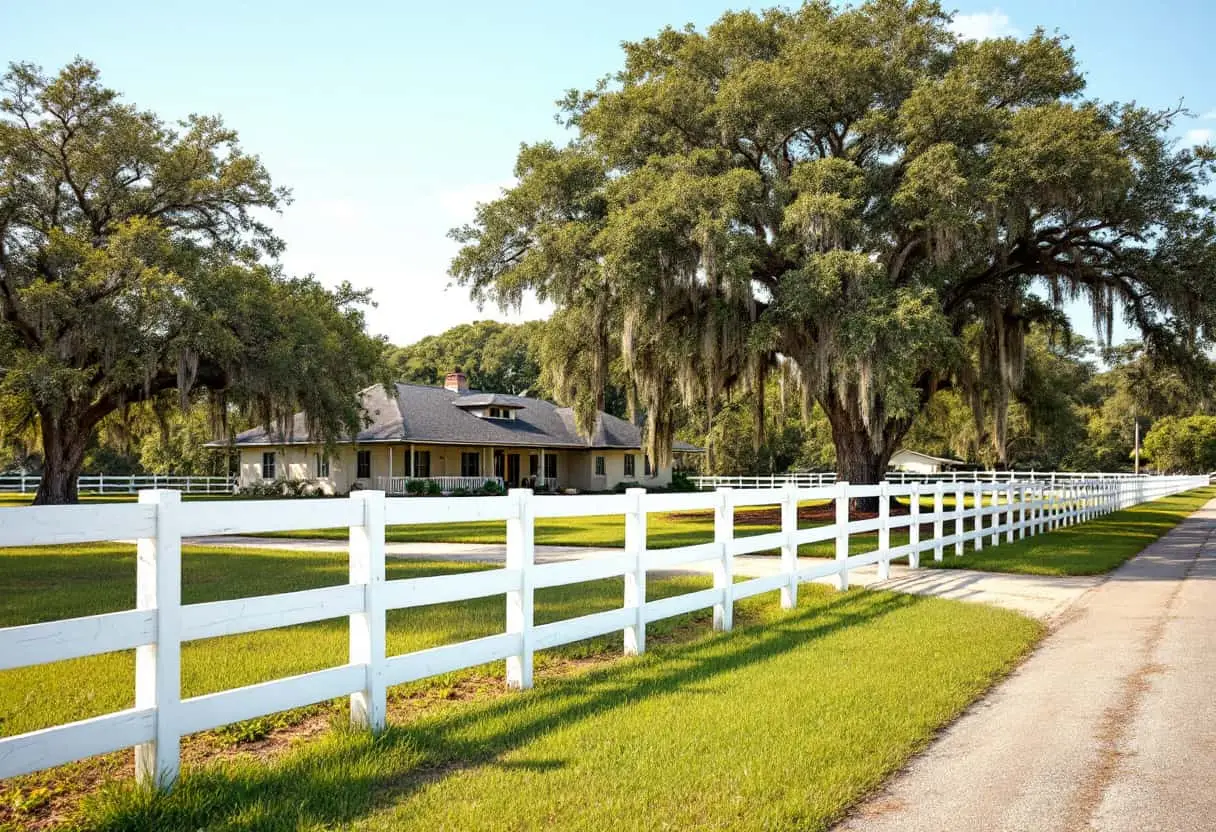
Fig. A large fenced property with a white wood fence, oak trees, and a ranch-style house in western Davie, Florida
West of University Drive
One real split in Davie’s geography decides whether a property has one at all.
A meaningful share of the large-lot and equestrian-zoned properties west of University Drive draw their entire household supply from a private well, paired with a septic system for wastewater.
Elsewhere in Davie, a property can run its own well strictly for sprinklers while the house itself stays on municipal water, worth confirming rather than assuming either way.
A new well, a significant pump replacement, or work tied to a septic system typically goes through Broward County, and we handle that paperwork as part of the job.
Before you call
Look for a separate pump house, pressure tank, or well head away from your municipal water meter, if you have one at all. We can confirm it during a visit if you are not sure.
That depends on testing, not assumption, whether the well serves the whole house or only the yard. We can point you toward water testing if that has never been done.
A well pump commonly holds up for one to two decades, with the spread coming down to usage patterns and water quality, and a neglected pressure tank problem can cut that span considerably.
Yes, in the same basic way: a well pump needs power to run, and a property depending entirely on its own well loses water along with electricity unless a backup plan is in place.
Pressure not right, or the pump not running?
A short-cycling or weak well pump is usually straightforward to fix once we know which part is actually failing.
Serving Davie and South Florida, 24 hours a day.